What Skills Will Children Need in an AI World?
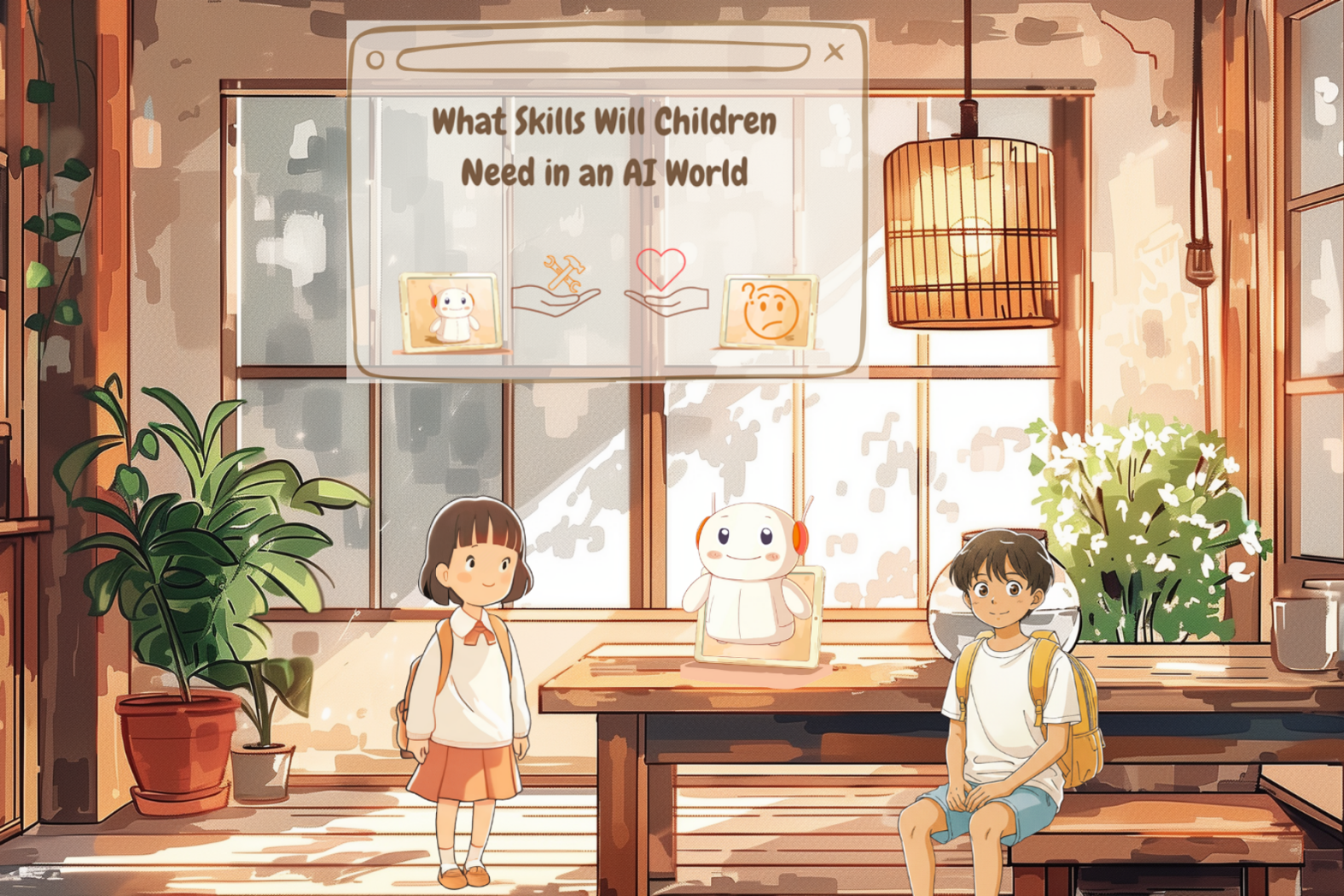
Artificial intelligence is becoming part of everyday life.
Children today are growing up with AI tools that can answer questions, write stories, generate images, translate languages, and solve problems in seconds. As these tools become more capable, many parents are asking an important question:
What skills will children need in an AI world?
It's a reasonable concern. If AI can perform many tasks faster than humans, what should children focus on learning?
The answer may surprise us.
The most valuable skills of the future may not be technical skills alone. They may be the uniquely human abilities that help us make good decisions, build relationships, and navigate an increasingly complex world.
One of the most important skills children will need is judgment.
AI can provide information, suggestions, and answers. But it cannot determine what is right, fair, or kind.
Imagine a child using AI to help with a school project. The tool may generate facts, ideas, and even a complete report. But the child still needs to decide whether the information is accurate, whether it makes sense, and whether it reflects their own understanding.
Knowing how to evaluate information may become just as important as finding information.
This is one reason why parents should encourage children to ask questions, think critically, and explore different perspectives. The goal is not simply to find answers but to understand how those answers are reached.
Another essential skill is decision-making.
Every day, children make choices about how they spend their time, attention, and resources. These small decisions gradually shape habits and character.
AI may help people analyze options more quickly, but it cannot remove the responsibility of choosing.
Whether deciding how to spend money, how to treat others, or how to pursue a goal, children will still need to think carefully about consequences and trade-offs.
At Kinwise, many of our stories focus on helping children practice this kind of thinking. Through everyday situations involving money, choices, and goals, children learn that thoughtful decisions often matter more than quick answers.
Creativity will also remain valuable.
While AI can generate content rapidly, human creativity often begins with curiosity, imagination, and lived experience.
A child who enjoys building, drawing, writing stories, solving problems, or exploring new ideas is developing skills that technology can support but not replace.
The future is likely to reward people who can combine human creativity with powerful tools.
Communication is another skill that will continue to matter.
Children who can explain their ideas clearly, listen carefully, ask thoughtful questions, and work well with others will have advantages in school, work, and life.
Technology can help people communicate, but meaningful relationships still depend on empathy, understanding, and trust.
Perhaps even more important is learning how to create value for others.
Many children grow up seeing money being spent but spend less time thinking about how value is created.
In reality, people earn income by helping others solve problems, providing useful services, or creating things that improve people's lives.
A teacher creates value by helping students learn.
A doctor creates value by helping people stay healthy.
An entrepreneur creates value by solving problems for customers.
As AI changes how work is done, the ability to identify problems and help others may become even more important.
Finally, children will need wisdom.
Information is becoming easier to access every year. AI can deliver facts almost instantly.
Wisdom is different.
Wisdom involves understanding what matters, considering long-term consequences, and making choices that align with our values.
It helps us decide not only what we can do, but what we should do.
Perhaps that is the most important lesson for the AI age.
Technology will continue to evolve. New tools will emerge. Jobs will change.
But children who learn good judgment, thoughtful decision-making, creativity, communication, value creation, and wisdom will be well prepared for whatever the future brings.
The goal is not to compete with AI.
The goal is to develop the human qualities that allow us to use AI wisely.
At Kinwise, we believe these conversations can begin earlier than many people think. Through stories, parent-child discussions, and reflection activities, children can start exploring questions about choices, responsibility, value, and technology long before they enter the workforce.
The future may be powered by AI, but it will still be shaped by human decisions. Helping children develop the wisdom to make those decisions may be one of the most valuable investments we can make in their future.