How Should We Talk to Children About AI?
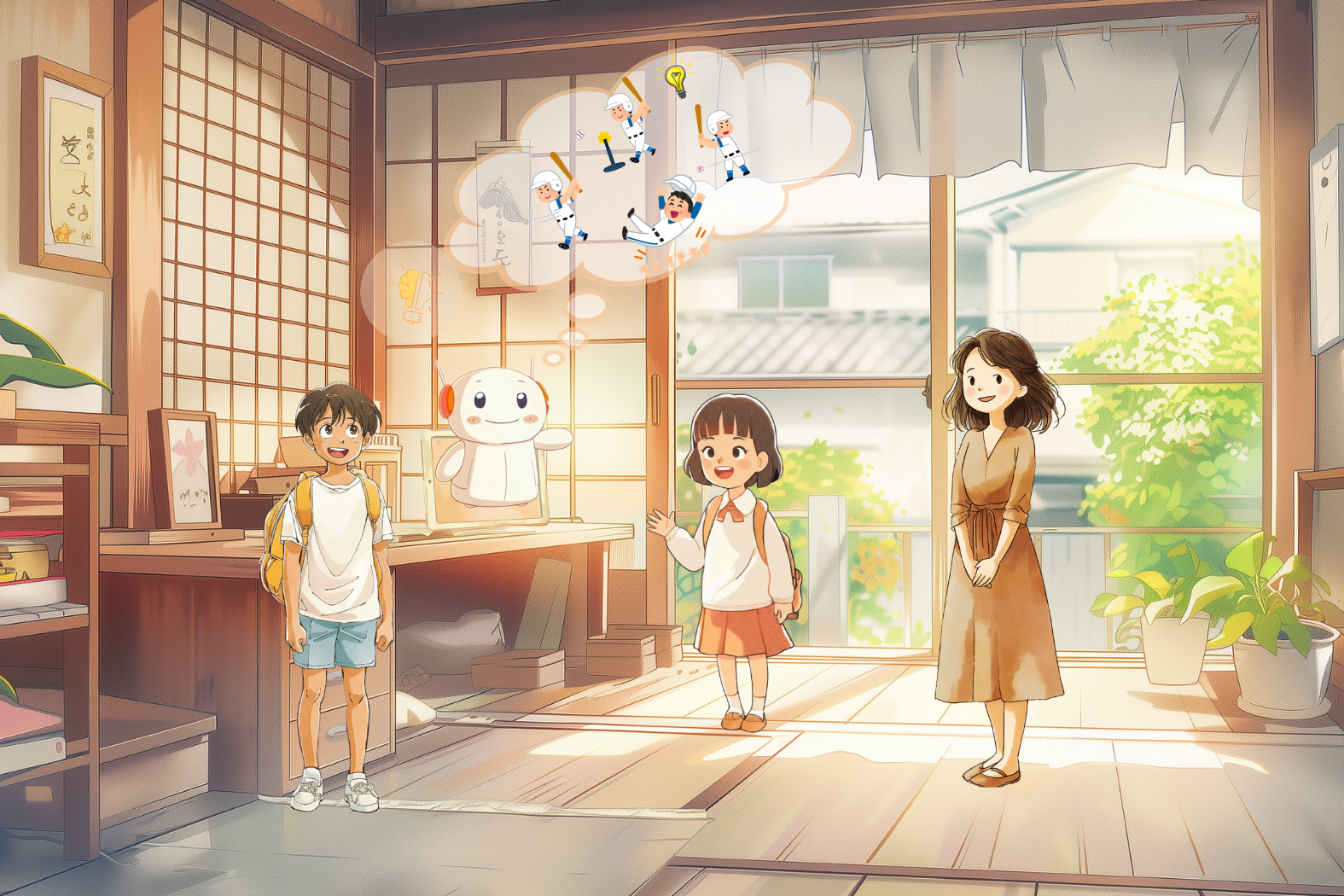
Artificial intelligence is no longer something children will encounter someday in the future.
For many families, it is already here. Children are asking AI questions for homework, seeing AI-generated videos online, talking to voice assistants, and using tools that can write stories, create pictures, and answer almost any question in seconds.
For parents, this can feel both exciting and unsettling.
Should children use AI?
Should they avoid it?
How much should they understand about it?
And perhaps most importantly:
How should we talk to children about AI?
The first step may be simpler than we think.
We can start by helping children understand that AI is a tool.
Not magic.
Not a person.
Not a replacement for human thinking.
Just as a calculator helps us with arithmetic and a bicycle helps us travel faster, AI helps us process information and complete certain tasks more quickly.
Tools can be incredibly useful. But tools do not decide how they should be used. People do. This distinction may become one of the most important lessons children learn in the years ahead.
When children ask AI a question, it can provide answers instantly. But children still need to ask:
Is this information accurate?
Does this make sense?
Is this fair?
Would I make the same decision?
Learning to ask good questions may become just as important as learning to find answers. Parents can help by treating AI conversations much like conversations about the internet years ago. The goal is not fear. The goal is understanding.
For example, if a child uses AI to help write a story, parents might ask:
"Which ideas came from the AI, and which ideas came from you?"
If AI helps with homework, parents could ask:
"Do you understand the answer, or did you simply copy it?"
If an AI image generator creates something impressive, parents might ask:
"What would you have created differently?"
These questions encourage children to remain active thinkers rather than passive consumers.
Another helpful conversation is about what AI cannot do.
AI can recognize patterns, generate content, and process enormous amounts of information.
But it does not have experiences.
It does not have values.
It does not understand kindness, fairness, courage, or responsibility in the way people do.
An AI system may suggest several possible actions. But it cannot decide which action is morally right.
That responsibility still belongs to humans.
This is one reason why human judgment may become even more valuable in an AI-powered world.
As information becomes easier to access, the ability to evaluate information becomes increasingly important. As answers become faster, thoughtful decision-making becomes more valuable. As technology becomes more powerful, responsibility matters even more.
At Kinwise, we often describe AI to children using a simple idea:
AI is a helper, not a boss.
It can support our work, inspire ideas, and save time.
But people remain responsible for the decisions that follow.
Children usually understand this idea surprisingly quickly.
After all, they already use many helpful tools. A calculator helps with calculations. A map helps us find directions. A bicycle helps us move faster.
AI helps us think through information more efficiently. But none of these tools replace the person using them.
Parents can also remind children that some of the most important human skills are becoming more valuable, not less valuable.
Creativity.
Curiosity.
Empathy.
Communication.
Judgment.
These qualities help people work alongside technology rather than compete against it. Perhaps this changes the question entirely.
Instead of asking:
"How do we prepare children for a world with AI?"
We might ask:
"What human qualities do we want children to strengthen as AI becomes more powerful?"
That question leads us toward a very different kind of education.
One that values not only knowledge, but wisdom.
Not only information, but judgment.
Not only efficiency, but humanity.
This belief is one of the reasons Kinwise includes conversations about AI alongside discussions about money, choices, value, and responsibility.
Because the future may include remarkable technologies. But it will still depend on people making thoughtful decisions about how those technologies are used.
Helping children develop that judgment may be one of the most important things we can do for the next generation.